


Plastics: Impacts and Action
-
4-week Global Online Course
-
October 20 – November 16, 2025
-
For educators, school teachers, university students, education leaders, community leaders, and volunteers
-
Learn from Cornell University instructors, guest speakers, and participants from around the world
-
25 professional-development hours
-
Cornell University certificate
-
Asynchronous + optional webinars
Join this course to advance real-world sustainability action and participate in a vibrant learning community!


Why take this course?
Cities are hotspots of innovation, and so is urban environmental education. Participants will experience several benefits:
-
Action-ready plan — Draft an action plan or improve an existing stewardship plan that you can implement in your organization, school, or community.
-
Ecosystem improvement — Explore how community action, clean-ups and organizational improvements can positively impact local ecosystem and empower communities for stewardship and policy-making.
-
Professional network — Join a global cohort of educators, planners, and city staff committed to strong communities, policy changes, and healthy ecosystems.
-
Cornell certificate — Earn a digital certificate verifying 25 professional development hours you can share with employers or licensure boards.


Is this course for me?
-
Non-formal educators & nonprofit staff – Design engaging stewardship programs and policy changes that resonate with diverse communities.
-
K-12 teachers – Weave city-based phenomena into science, civics, or art classes while meeting learning standards.
-
Municipal & private-sector professionals – Create people-centered green spaces and allocate resources that spark community learning.
-
University students & early-career professionals – Build a portfolio project, grow your network, and explore careers at the nexus of cities, sustainability, and education.
What you will learn
Based on the Urban Environmental Education Review and recent research, you will be able to:
-
Understand urban contexts, participants, and learning settings.
-
Apply research-based approaches (place-based, problem-based, project-based).
-
Connect urban EE activities to science, climate, and sustainability standards.
-
Create and peer-review an Urban EE action/lesson plan for your community or classroom.

Course experience
-
Format – asynchronous lectures, readings, discussion boards, plus two optional live webinars each week (recorded, available for watching later).
-
Workload – about 5 hours per week; 25 hrs total logged on the certificate.
-
Platforms – edX Edge for core content; optional WhatsApp/WeChat groups for informal networking
-
Learning approaches – We create social learning experiences through discussions and sharing ideas. We also believe in the power of applying what you learn to your own classrooms, organisations, and communities, so you’ll craft an Action or Lesson Plan by the end of the course.

Webinar speakers
Our course features two live webinars each week with inspiring guest speakers who share ideas and stories from the frontlines of urban environmental education.
These sessions are among the most anticipated parts of the course, sparking creativity and helping participants apply new insights to their own programs.
Recordings will be available on the course platform for those who cannot join live sessions.
Instructors

Fish Yu
Graduate student in Natural Resources and the Environment, Cornell University

Alex Kudryavtsev, PhD
Course co-designer,
Cornell University
Research Associate

Marianne Krasny, PhD
Course co-designer,
Cornell University Professor
Teaching Assistants

Wanying Wu
Chinese Course Support, PhD Candidate in Environmental Engineering, University of Wyoming

Chen Zhang
PhD Candidate, Department of Education Management, East China Normal University
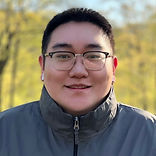
Renda Sun
Assistant for participants in China, MS Candidate in Environmental Conservation Education at NYU
Course Contact
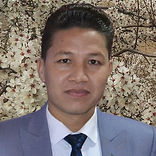
Hamidullah Nikzad
Course administrator.
Questions? feel free to ask Hamidullah Nikzad, our course administrator. Please type "Urban EE" in the subject line of your email. CivicEcology@cornell.edu
Meet your team
Cornell Civic Ecology Lab faculty, researchers, and graduate TAs will guide you, including Fish Yu, Alex Kudryavtsev, and Prof. Marianne Krasny.
Course Trailer
Expert Webinars
We will conduct a series of webinars and open discussions featuring outstanding experts and educators from both formal and non-formal education. Participation in these live meetings is optional. They will be recorded and can be watched at any time during the course.
Tuition
Our tuition tiers support course delivery and growth:
-
$500 – Super Sponsor — Support more participants and make a bigger impact on course growth and innovation.
-
$200 – Sponsor — Support participants and help sustain course development.
-
$100 – Standard — For participants in the United States, Canada, European countries, Japan, South Korea, Singapore, Mainland China, Taiwan, Australia, and New Zealand.
-
$25 – Reduced — For participants from all other countries.
-
Groups – Group lead registers first, shares their code with 10+ participants who pay. After 10+ participants used the code and paid, the group lead’s registration fee is refunded.
-
Competitive scholarship – Apply by Sept 5, 2025; awards announced Sept 10. Learn more (PDF file).
How to earn the certificate
Complete weekly discussions, watch/attend at least one webinar, and submit your Action Plan or Lesson Plan by Oct 19 2025 to receive a Cornell PDF certificate emailed within two months.


Need help?
Most logistics are covered above. But if you still have questions, please email CivicEcology@cornell.edu with “Urban EE” in the subject line.
We are glad to support your learning journey and value your efforts to make urban communities greener, more just, sustainable, equitable, and resilient through environmental education, urban planning, and sustainability action.
Meet Our Team
Instructors

Bethany Jorgensen, PhD
Course designer,
Cornell University and New Mexico Highlands University
Marianne Krasny, PhD
Course co-designer,
Cornell University Professor
As you learn with us, you will be supported by our experienced and dynamic team! Instructors include Bethany Jorgensen and Marianne Krasny. The course team also includes several co-instructors, teaching assistants, and administrators. We cannot wait to have you in our course!
Co-instructors
Alex Kudryavtsev, PhD
Course co-designer, main instructor in 2023.
Cornell University
Research Associate
Fish Yu
Graduate student in Natural Resources and the Environment, Cornell University

Unji Lee
Chief Programmer of the
Education Sector at RCE Tongyeong / Sejahtera Forest

Bomyung Seo
Senior Programmer of the Education Sector
at RCE Tongyeong / Sejahtera Forest
Renda Sun
AMS Candidate in Environmental Conservation Education at NYU
Course Administrators
Please refer to our FAQs below. If you still have questions, feel free to ask Amy Daniel and Kim Snyder, our course administrator, any questions about this course. When you contact us, please type "Plastics" in the subject line of your email.
CivicEcology@cornell.edu

Amy Daniel
Course administrator, Cornell University MPH candidate

Kim Snyder, MS
Course administrator,
Program Coordinator at Mass Audubon
Support team in Korea

Woojin Lee

Seoyeon An

Yena Cho

Hyun-a Choi

Seeun Park

Jaeyong Sung

Course description
This course explores our social and environmental relationships with plastics and uses plastics to help understand the complex dynamic systems shaping our planet and our lives. During the course we will use critical and systems thinking while learning about everything from the plastic lifecycle, to plastic's social and environmental impacts, to NGO and government plastics policies. You will apply your knowledge by designing and implementing a locally-relevant action targeting plastic pollution. Such projects may include working for policy changes at schools or workplaces, art projects, reuse initiatives, and so much more! This is a unique opportunity to be part of an online learning community taking action against plastic pollution.
The course is largely asynchronous--meaning you can access the short lectures, readings, and other materials when it’s convenient for you. We also hold weekly webinars (recorded for those who can’t make it) as well as optional weekly office hours.
Participants
Teachers, educational professionals, volunteers, parents, university students, and environmentally-concerned citizens from any country.
Learning approach
The course is based on two principles: (1) Learning is social: participants learn by discussing ideas and sharing resources; (2) Learning should lead to action: participants will apply course content to develop and implement a Plastics action plan in their communities, neighborhoods, organizations, cities, or educational programs.
Technology
We will use a learning management system (edX Edge) for readings, video lectures, and discussion. We will also use Facebook, WhatsApp, and WeChat for optional informal discussions and sharing among participants. The course is asynchronous, and a few optional live meetings will be recorded an posted on edX Edge.
Course outline
Week 1: The Global Plastic System
-
A brief history of plastics
-
Intro to systems thinking
-
Plastic from start to finish
-
Plastic pollution overview
-
Plastic and environmental justice
Week 2: Plastic Impacts
-
Plastics and climate change
-
Macro plastic impacts
-
The rise of microplastics
-
Aquatic plastic pollution
-
Litter cleanups
Week 3: Plastic Governance
-
Extended Producer Responsibility
-
Recycling
-
Bag bans
-
Biodegradable, compostable, & bio-based plastics
-
Astroturfing and greenwashing
Week 4: Creativity in Action
-
Repurposing
-
Reuse and repair
-
Circular and sharing economies
-
The art of plastic waste
-
Thinking outside the plastic system
After Week 4, course participants will have two weeks to finish and submit a 1-page summary of the action they design -and take, if possible- to intervene in their local plastic pollution system; the final project for this course.

Learning Outcomes
By the end of this course, participants will:
-
Learn about systems thinking and apply systems thinking to describe the plastic lifecycle, plastics' global circulation as goods and waste, and the environmental and health impacts of plastics.
-
Discuss the feasibility and effectiveness of plastic governance approaches.
-
Develop and implement a locally-relevant action to address plastic pollution.
-
Critically reflect on the experience and outcomes of your plastic pollution intervention and write a 1 page report describing your action and reflections.
-
Participate actively in a global online community of plastic-concerned citizens.
Workload
Total workload is 25 hours, which will be reflected on your certificate. On average, participants work on this course about 5 hours per week. The course includes four weeks of instruction, and two weeks to submit the final project (an action plan). Weekly assignments include lectures, readings, and discussion questions. Participants are required to participate in a minimum of one course webinar synchronously or by watching one recorded webinar. Required course project is creating a Plastics action plan.
Cost: $70
Value for the price is excellent. Our courses depend on your contribution, which is paid by most participants. You can pay a higher fee ($120) to sponsor another student, or a lower or no fee if you cannot pay or live in a country without international payment systems (e.g., Afghanistan, Iran).
Your Certificate
Participants who complete the course – including the weekly assignments and the final project – are awarded a Cornell University certificate (PDF).

Frequently Asked Questions
-
What time(s) of the day will this course take place? During the course time, we will release most of the course materials including pre-recorded video lectures, readings, and discussion questions every Monday morning (NY time). You can choose anytime during each week to review and learn from the course materials. We will also host one live webinar each week. Webinars will be recorded for participants unable to attend in person.
-
Why do you have more than one level of course fees? To ensure equal access to course materials and instructor feedback, we are committed to providing materials to all students regardless of their location or ability to pay. There is an option for students to pay a reduced fee if they live in a country without a system to transfer funds to the U.S. (e.g., Afghanistan, Iran, Somaliland) or if they cannot afford the basic $70 fee (economic hardship). Participants in most countries can afford this price, provided they don't have serious economic problems. For course development, offering, and administration. We appreciate your support!
-
If I pay more than $70, can I link with the student I sponsor? No, we would like to keep who pays and who doesn’t pay anonymous. However, you will be able to connect with students from many different countries through the course social media and EdX Edge discussion board.
-
Can I sponsor more than one student? Yes, we would be grateful for your support of other students, especially in countries with emerging economies, who otherwise cannot afford paying for this course.
-
What is the refund policy? You may request during the first week of the course.
-
How long is the course? This is a 4-week course with two additional weeks to complete the final project (one-page lesson plan). If you complete all required course assignments you will receive a Cornell Certificate.
-
Can I submit the course project in my native language? We strongly encourage you to submit all assignments in English so that instructors and other students can give you feedback. But you can also submit your final project in Chinese. Our teaching staff speak English and Chinese.
-
How will I receive course certificates? You will receive your course certificate via email within two months after the end of the course.
-
What social media are used in this course? We use optional Facebook, WhatsApp, and WeChat groups for participants and instructors to share ideas and resources. Only course participants can be part of these groups; please do not invite people outside this course.
-
Can I share course materials with my colleagues and friends? You are NOT allowed to share, copy, distribute, or forward any materials from this course. They are only for your own learning.
If you have other questions, please contact our course administrators (CivicEcology@cornell.edu). Please write “Plastics” in the subject line.